
The UX "Hero’s Journey" Presentation
Project details
Client
PPL Experience Design Team
Role
Writer and Presenter
Timeline
3 weeks
Overview
Storytelling is core to how we connect with each other and with the products and services we rely on. When the Digital Experience team at PPL began looking for a new way to empathize with our customers and communicate the value of thoughtful content design to leadership, I found inspiration in a timeless framework: the Hero’s Journey.
This inspiration led me to create and present a 90-minute workshop to help designers and writers reimagine the digital utility experience through the lens of this storytelling structure. My goal was to help my team build empathy, deepen understanding of the user journey, and equip ourselves with a fresh way to frame design decisions.
The challenge
This presentation came with a long list of considerations and potential roadblocks:
- I needed a compelling, accessible framework for communicating UX writing value to a cross-functional audience
- My audience and team members had varying levels of familiarity with narrative design principles
- The workshop had to balance inspiration with practical tools and applications
- The internal storytelling framework presented needed to be scalable and reusable across projects
Solving the challenge
Empathy as a map
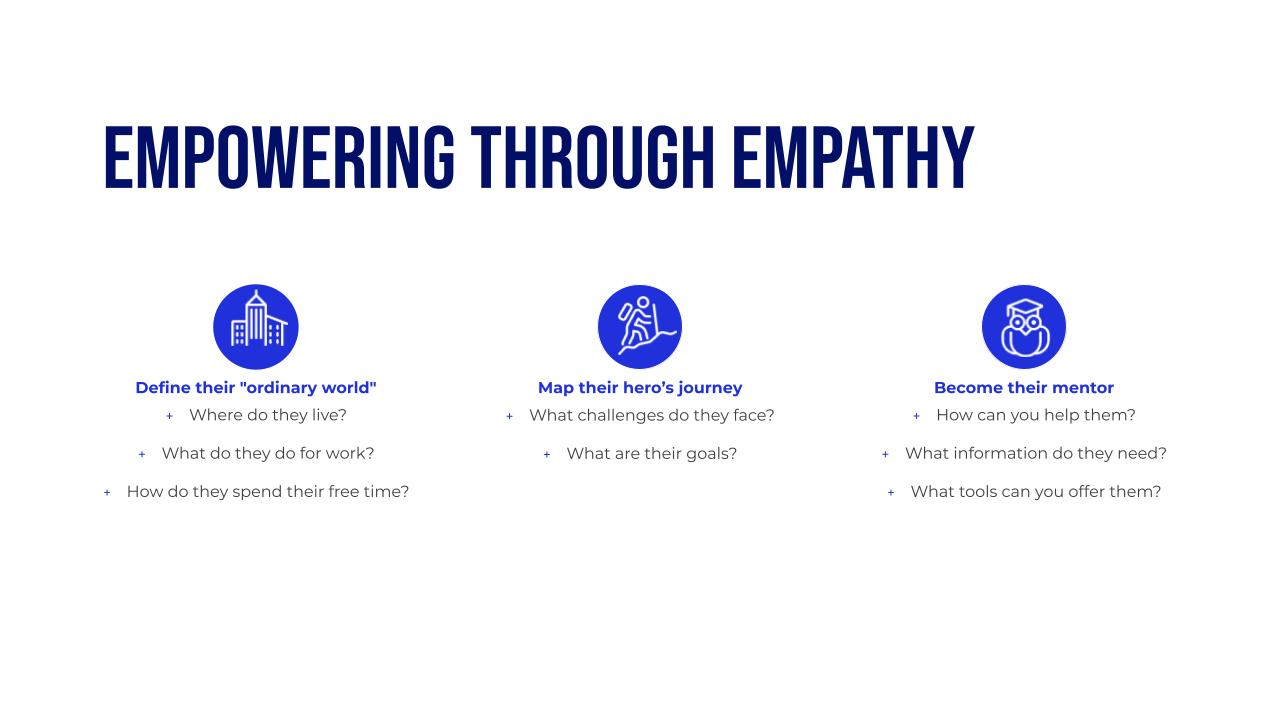
PPL customers are often facing emotionally charged moments, especially during major life transitions like moving or navigating financial hardship. Our team needed a way to map these journeys with more empathy and clarity.
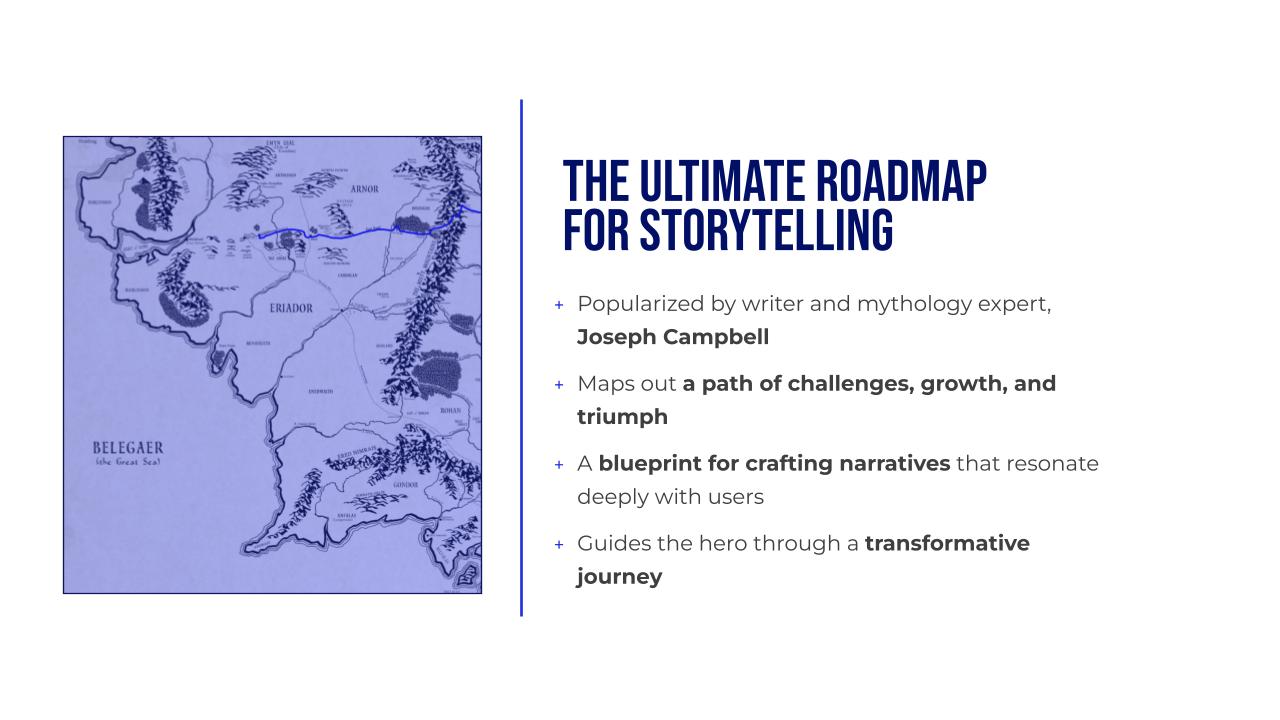
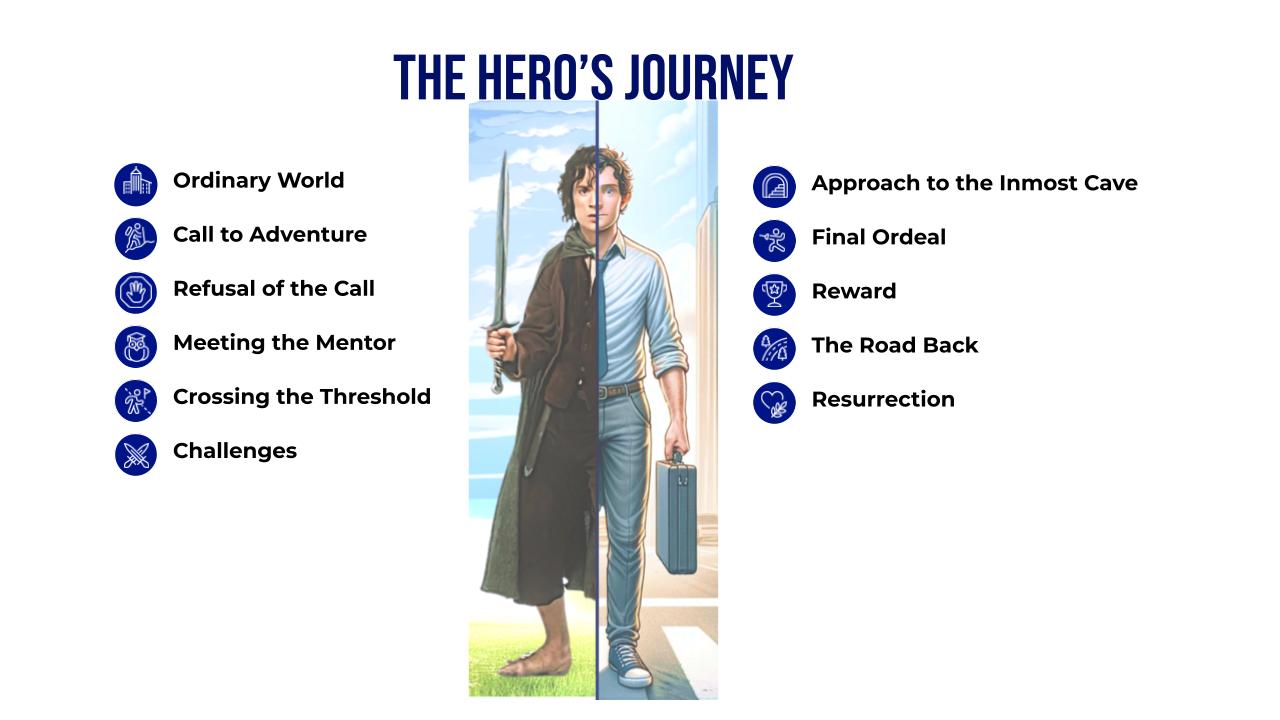
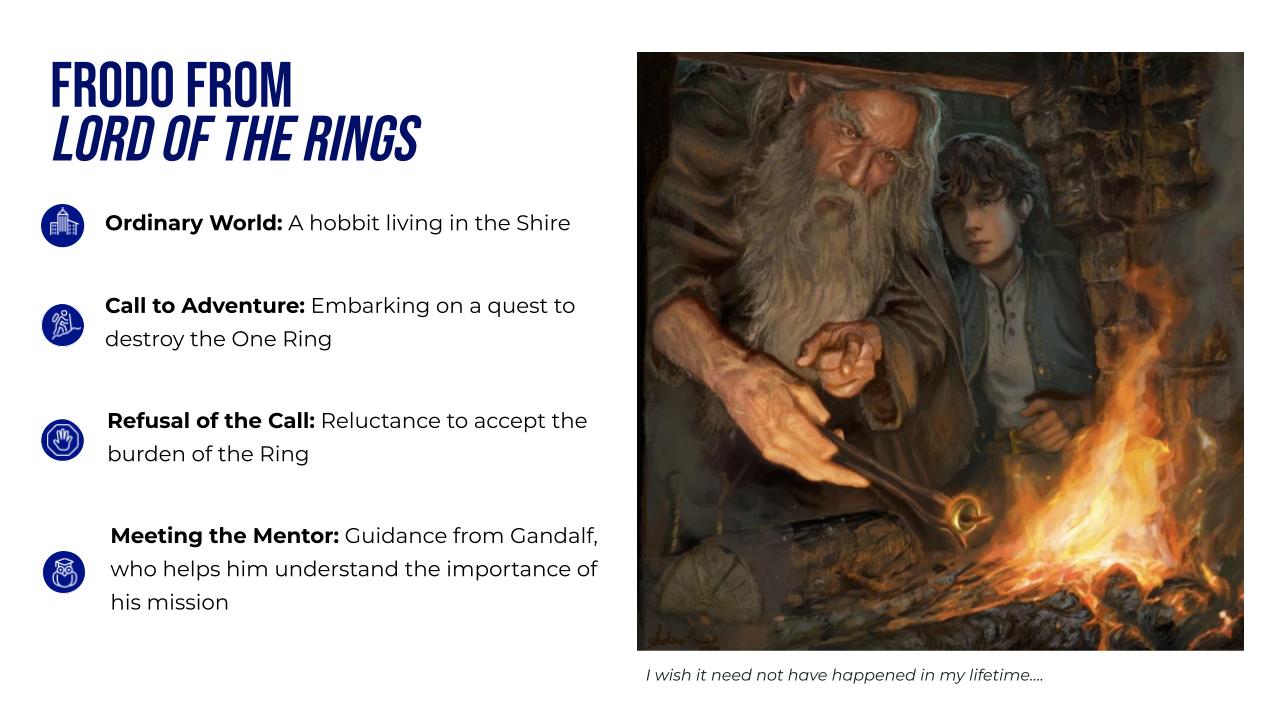
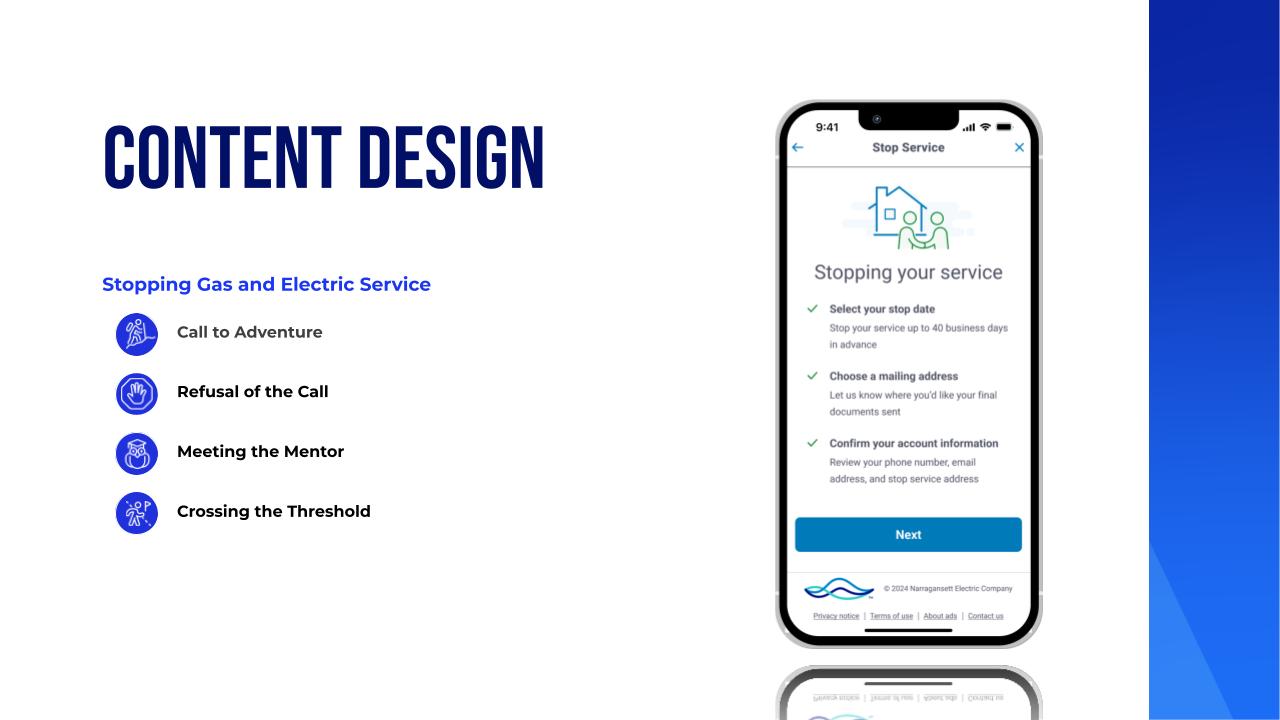
To do this, I adapted Joseph Campbell’s Hero’s Journey to real PPL and Rhode Island Energy customer scenarios such as stopping service, enrolling in payment assistance, and starting utilities for the first time. In my presentation, I worked to bring these journeys to life using narrative storytelling, pop culture touchpoints like Frodo and Miles Morales, and real-world customer data to keep the talking points both relatable and practical.

Developing a framework
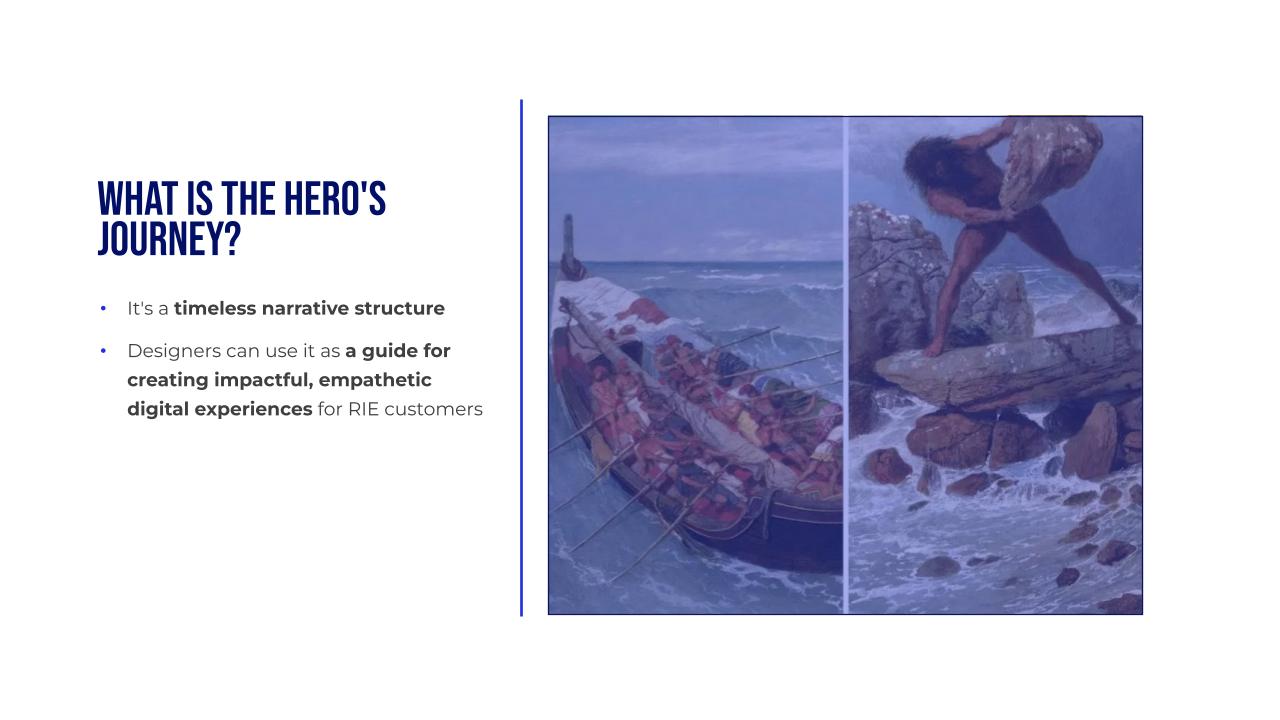
Our team wanted more actionable ways to integrate empathy into everyday design work, so I created a visual and written storytelling deck, supported by a live script and journey outlines, that reframed common utility experiences through a multi-staged Hero’s Journey model.
Each stage was grounded in examples from RIE’s service flows—for instance, the “Call to Adventure” might be a customer’s decision to move, while the “Refusal of the Call” could reflect their fear of fees or long wait times—and I connected these moments to Frodo’s journey in The Lord of the Rings to make the model more engaging and relatable.
The result was a narrative framework that teams could draw on to spark reflection in retros, inspire content strategy brainstorms, and communicate design decisions more effectively to leadership.
Turning customer journeys into heroic journeys
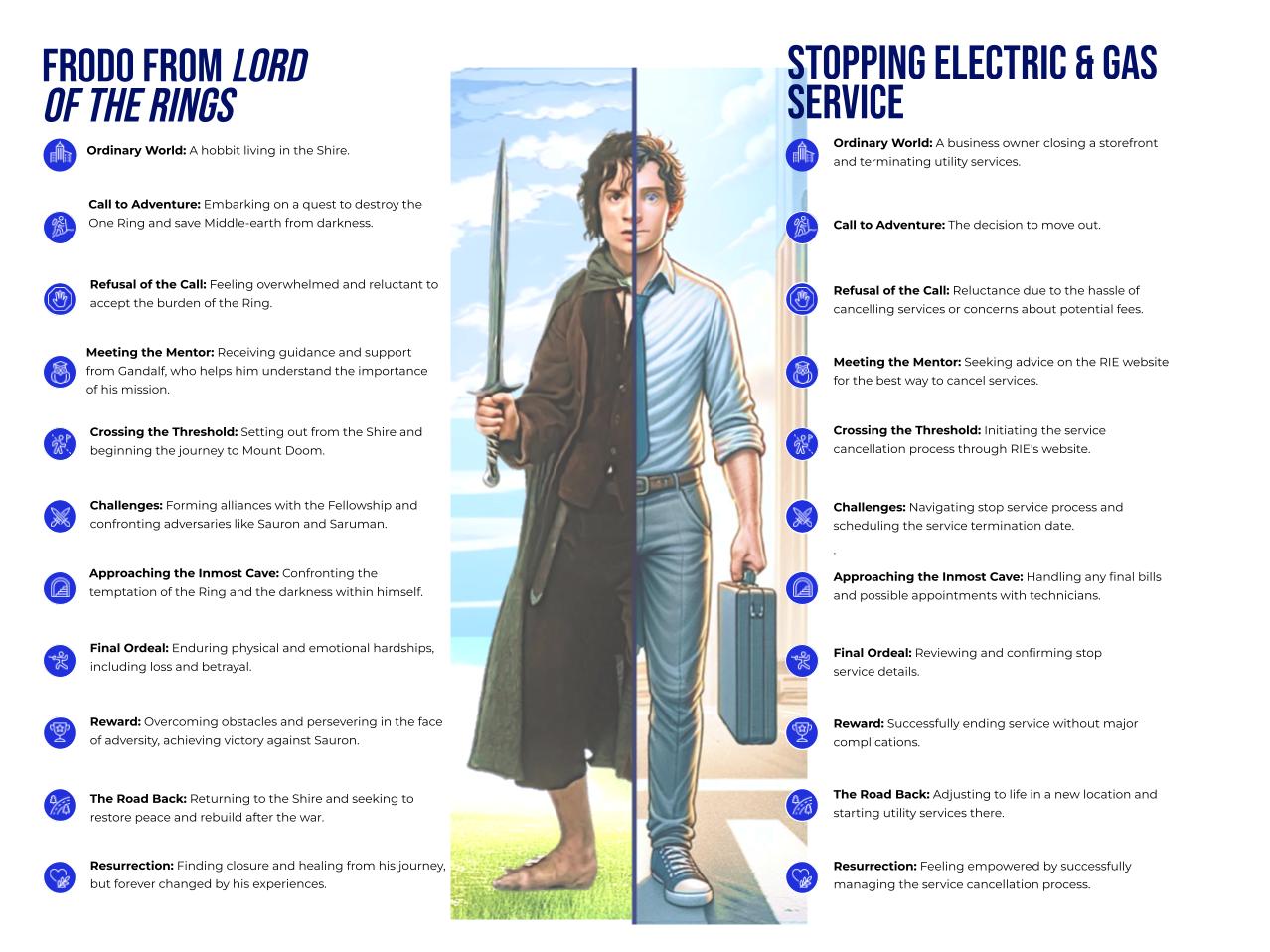
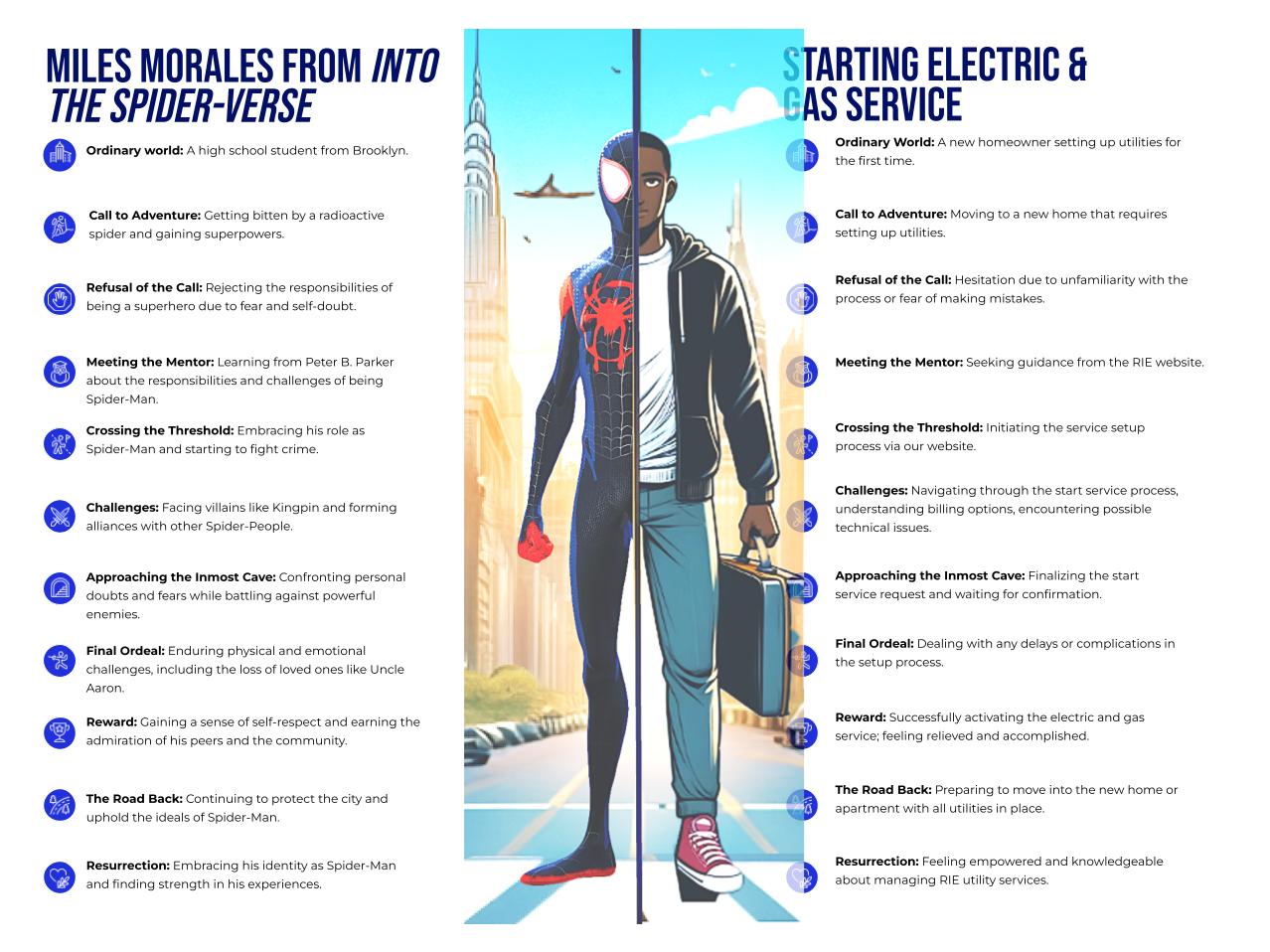
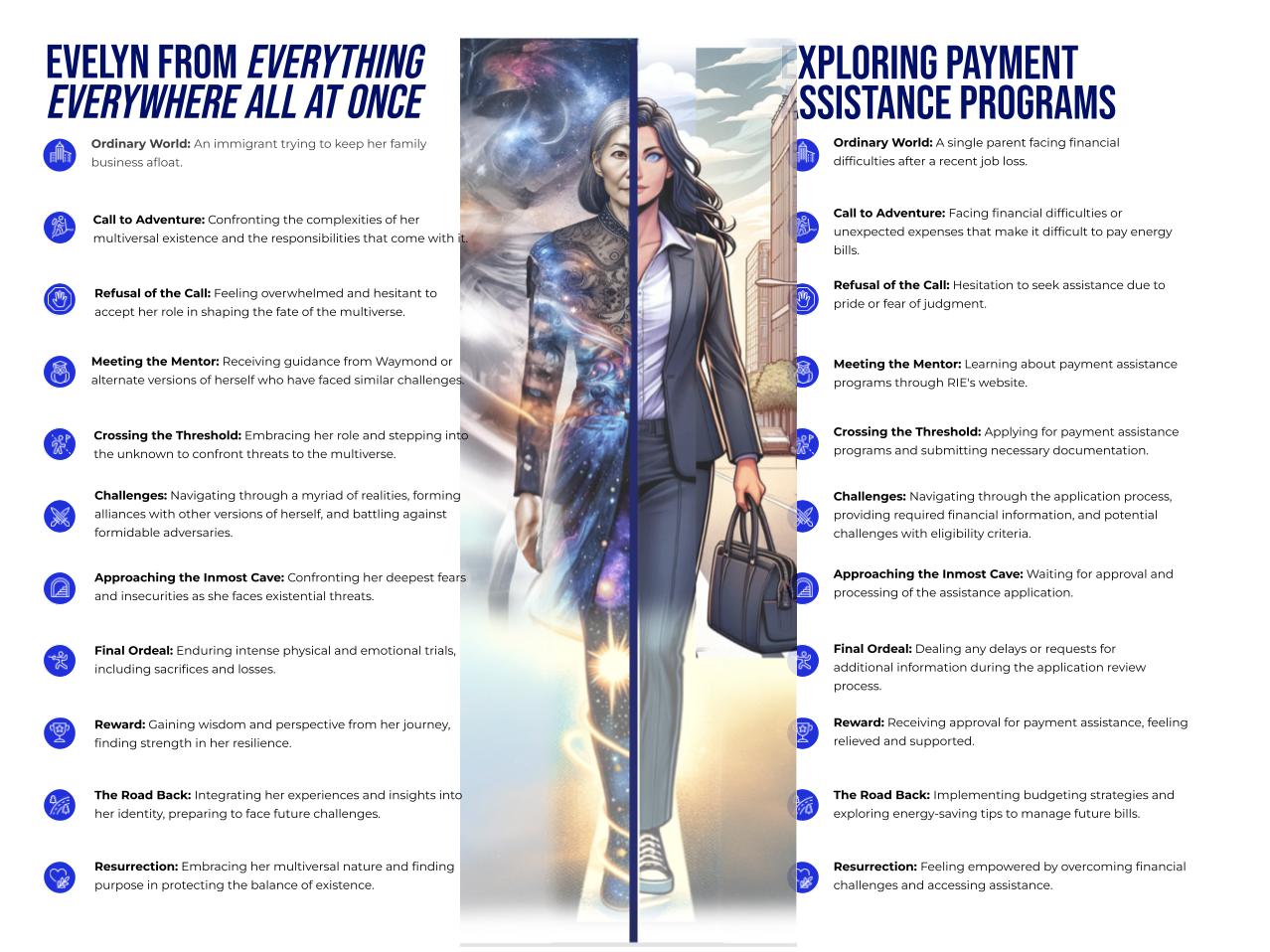
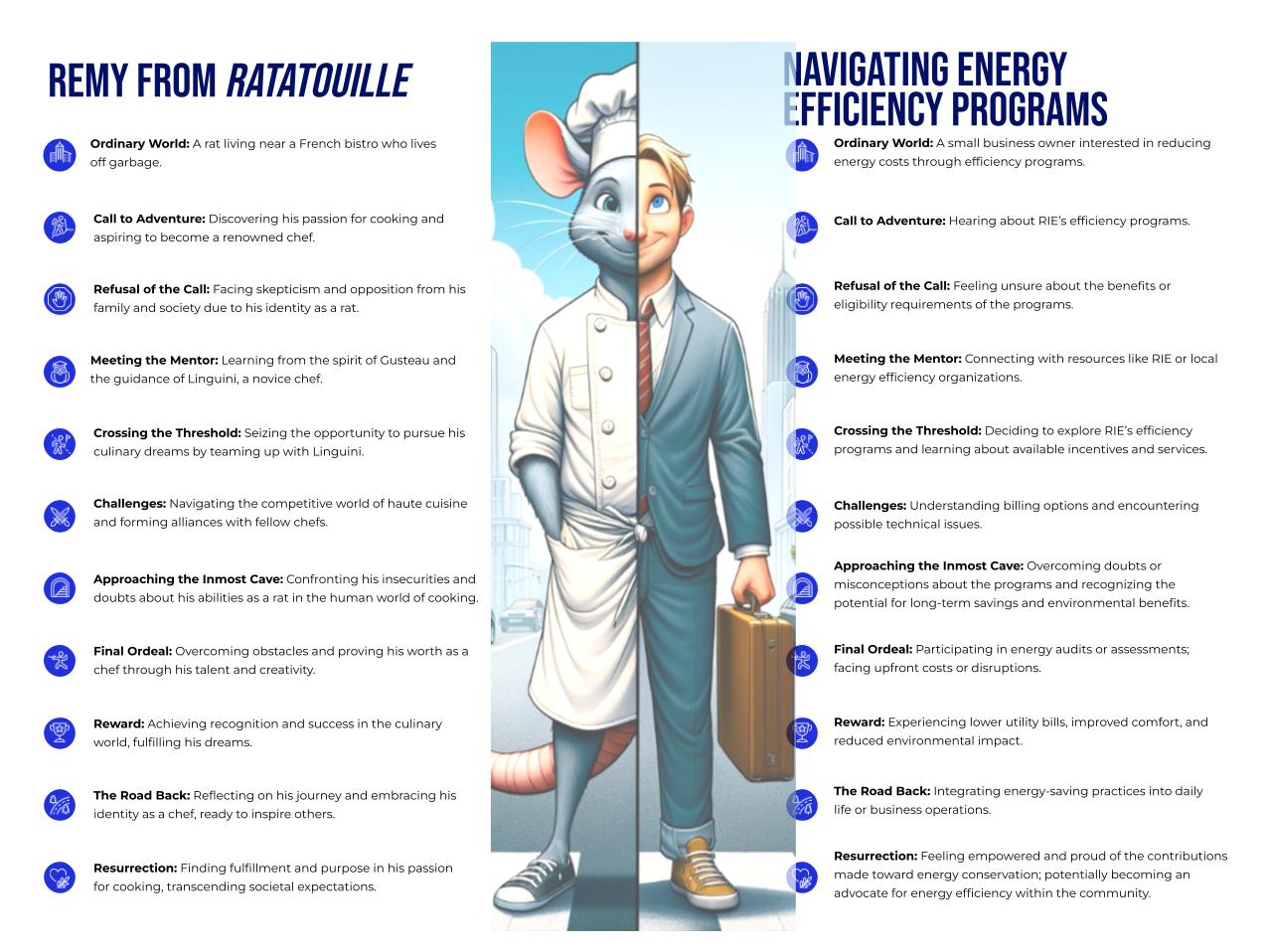
To better understand what customers go through during major life transitions, we reimagined common utility journeys—like stopping service, starting utilities for the first time, or seeking payment assistance through the lens of the Hero’s Journey. Each scenario was paired with a pop culture icon like Frodo, Miles Morales, or Evelyn Wang to make the steps feel both relatable and memorable.
We turned these journeys into large, illustrated placemats that team members could display at their desks or home offices. Having them visible every day helped keep customer needs top of mind, reminding designers where content could mentor, guide, or empower people at each stage of their experience. This approach gave our team a practical, repeatable way to bring empathy into the design process.
The results
The presentation was extremely well received. The head of design asked me to share it with other company leaders as an example of the leaps our design department was making, and he requested that the materials be distributed across the team and displayed onsite for ongoing reference.
Team members told me how engaging they found the presentation, even showing me the notes they had taken, and many expressed appreciation for the way I approached the work with such a clear focus on advocating for our users.
Collaboration and processes
This project came together quickly over three weeks. I collaborated with product designers, service designers, and researchers to shape each customer narrative, and worked with our director of UX to align the workshop with broader team goals.
I partnered with another UX writer on the team to review outlines for accuracy and tone, and teamed up with a visual designer to create materials that paired customer journeys with cultural characters and their hero’s journeys. Throughout the process, I pushed for narrative clarity, emphasized plain language at every stage, and ensured that each metaphor translated into actionable design guidance—not just abstract “inspiration vibes.”
Outcome
The Hero’s Journey workshop became a cornerstone of our storytelling toolkit. Designers across the team began using the framework to think more holistically about user emotion, especially for transactional flows.
What we saw:
- More unified language across teams when discussing user experience
- Higher engagement in retros and critiques, especially when framing content choices as moments in the customer’s journey
- Ongoing requests to expand the workshop into other parts of the org